

Section outline
-
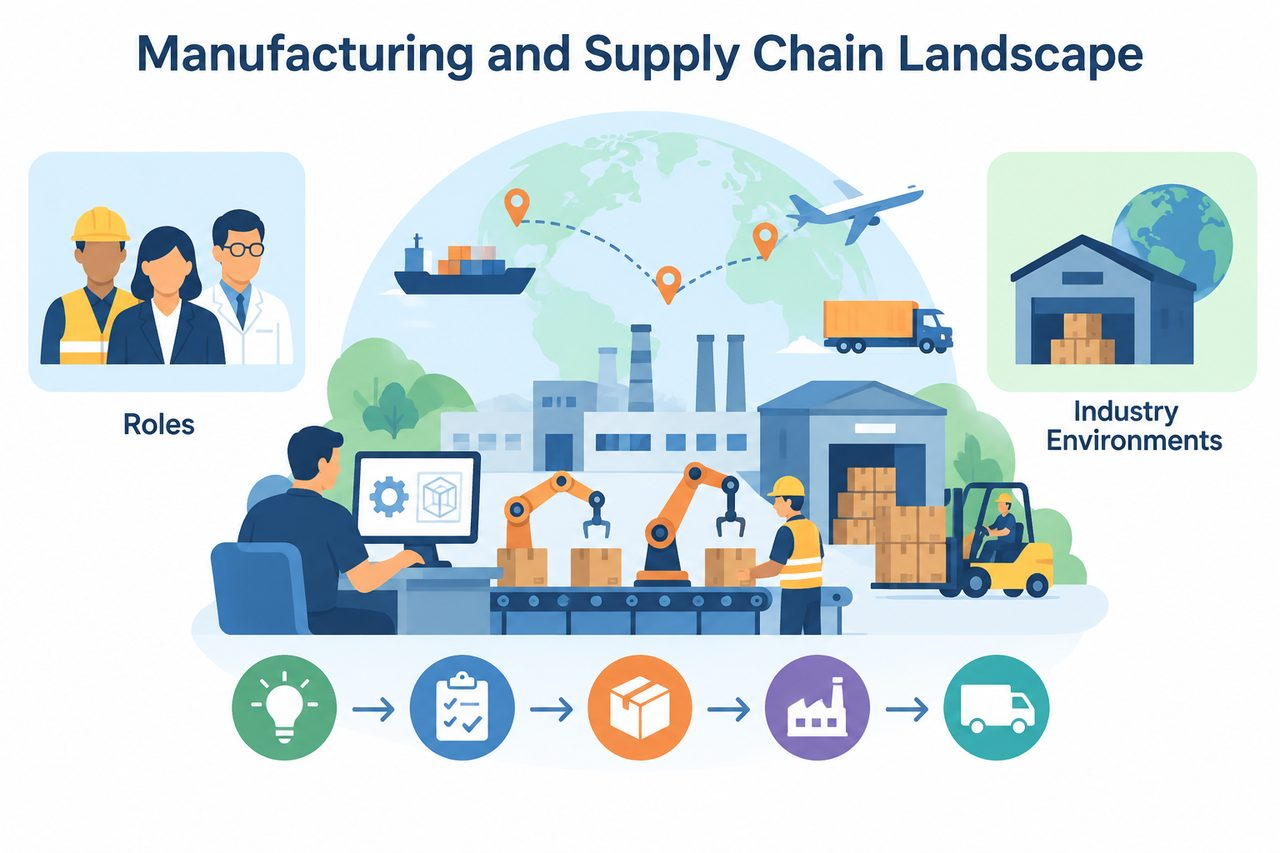
This section shifts from the course overview to the environments where manufacturing and supply chain work takes place. You’ll examine the roles involved across different industry settings, building a practical understanding of who contributes to operations and how responsibilities may vary depending on the production environment. This perspective matters because decisions, priorities, and constraints often look different across roles and industries.
From there, you’ll follow the end-to-end production flow to see how work, materials, and information move through the broader process. Understanding the people and environments first provides context for recognizing how each stage connects and where coordination is essential. Together, these lessons establish a clear landscape for the concepts ahead, linking individual responsibilities to the complete production system. We begin by exploring the roles and industry environments that shape how manufacturing and supply chains operate.
-
Students mustView
-
Students mustView
-
-
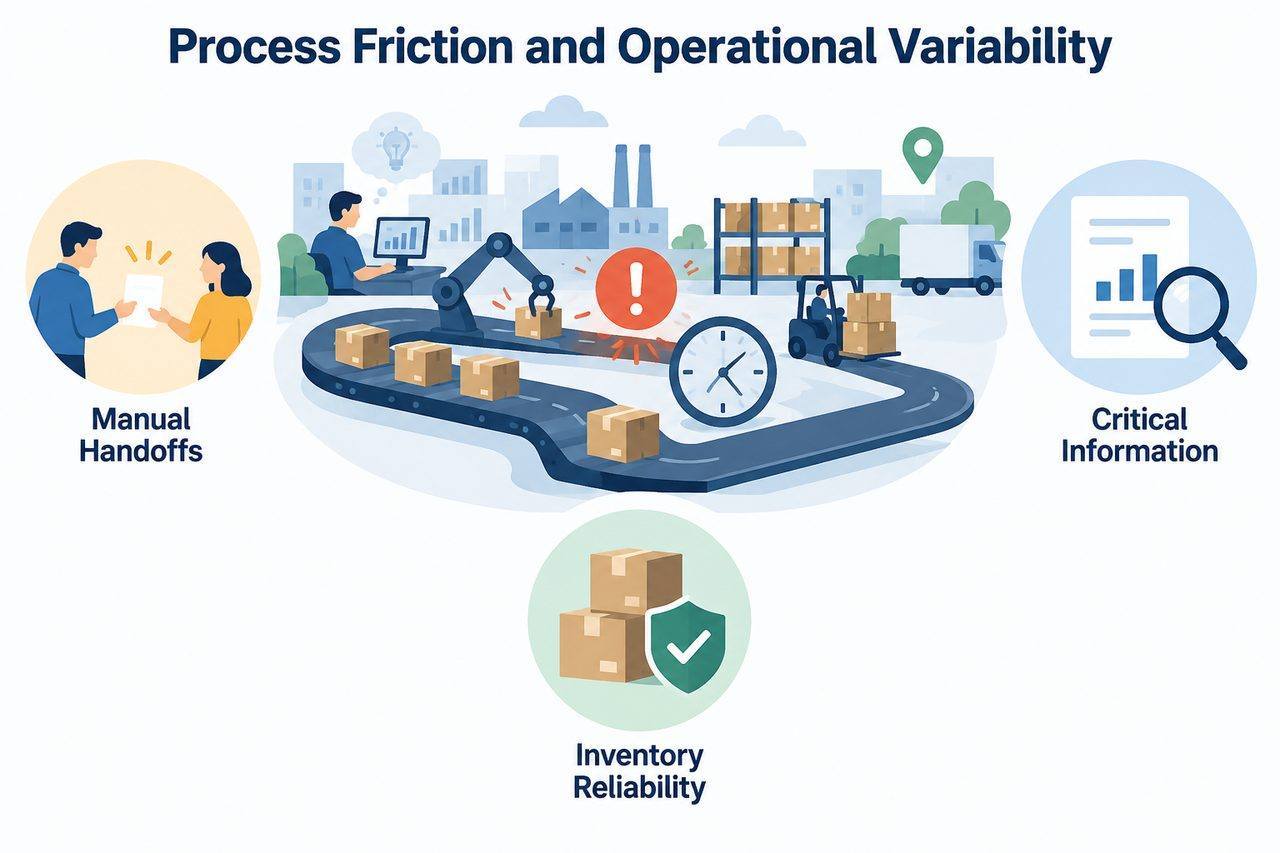
This section shifts attention to the operational conditions that make otherwise sound processes inconsistent. You’ll examine how manual handoffs create delays, introduce gaps, and make outcomes dependent on individual follow-through. From there, you’ll consider which operational information is truly critical—and why its accuracy, accessibility, and timing determine whether teams can respond effectively.
The final lesson connects these issues to inventory reliability, showing how uncertain or outdated inventory data weakens decision quality across operations. Together, the lessons build a clear chain: friction in the flow of work affects the information teams receive, and unreliable information leads to poorer inventory decisions. Understanding that chain will help you recognize where variability begins and how it spreads. We begin by tracing what happens when work must pass manually from one person or system to another.
-
Students mustView
-
Students mustView
-
Students mustView
-
-
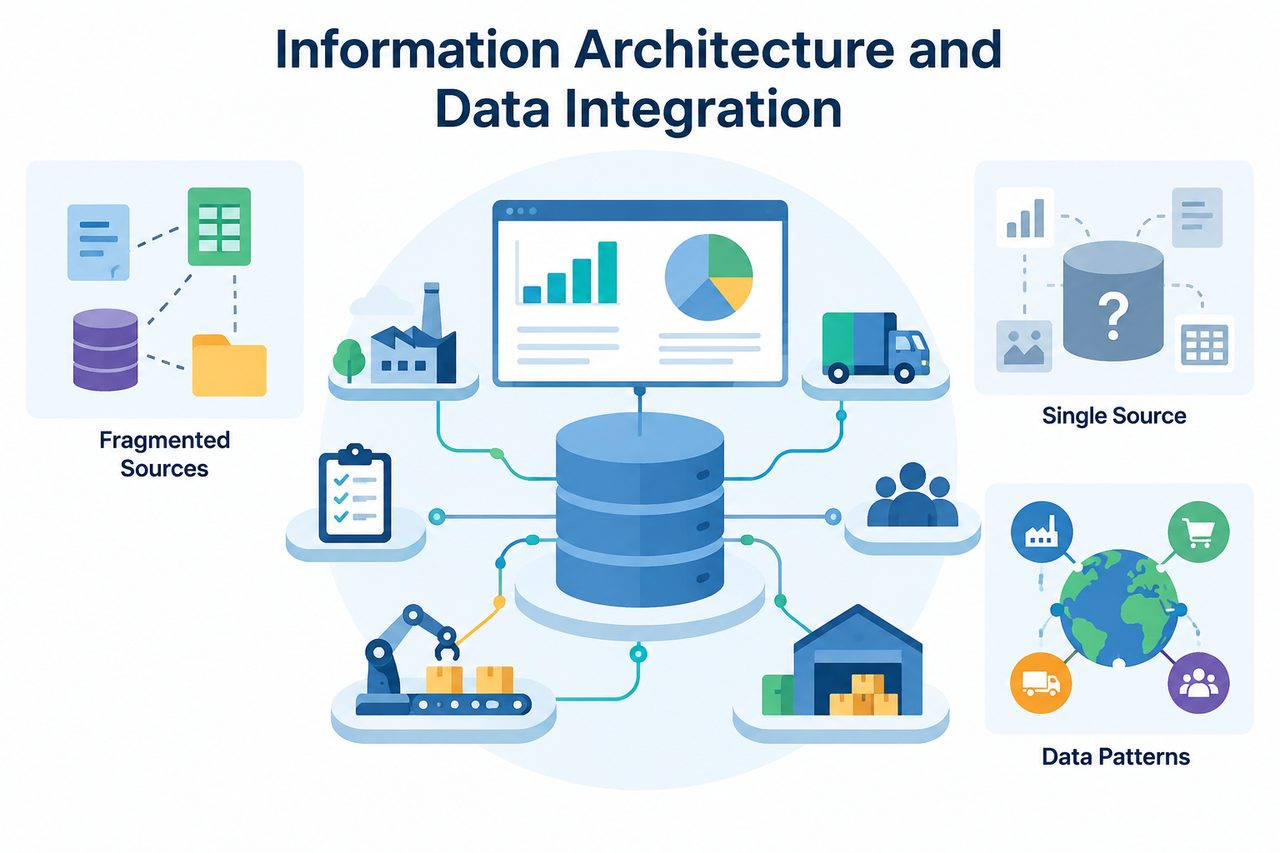
With the earlier foundations in place, this section turns to a core operational challenge: making information reliable and usable across disconnected systems. You’ll first examine how fragmented sources create inconsistencies, obscure context, and make it harder for teams to find and trust the data they need. From there, you’ll explore what happens when an organization lacks a single source of truth—and why resolving conflicting records requires more than simply choosing one system.
The section then broadens to data architecture patterns used across industries, showing how organizations integrate information while accounting for different systems, workflows, and governance needs. Each lesson builds from diagnosing fragmentation, to understanding the need for authoritative information, to recognizing structural approaches that can support dependable integration at scale. We begin by tracing how fragmented information sources affect everyday decisions and operations.
-
Students mustView
-
Students mustView
-
Students mustView
-
-
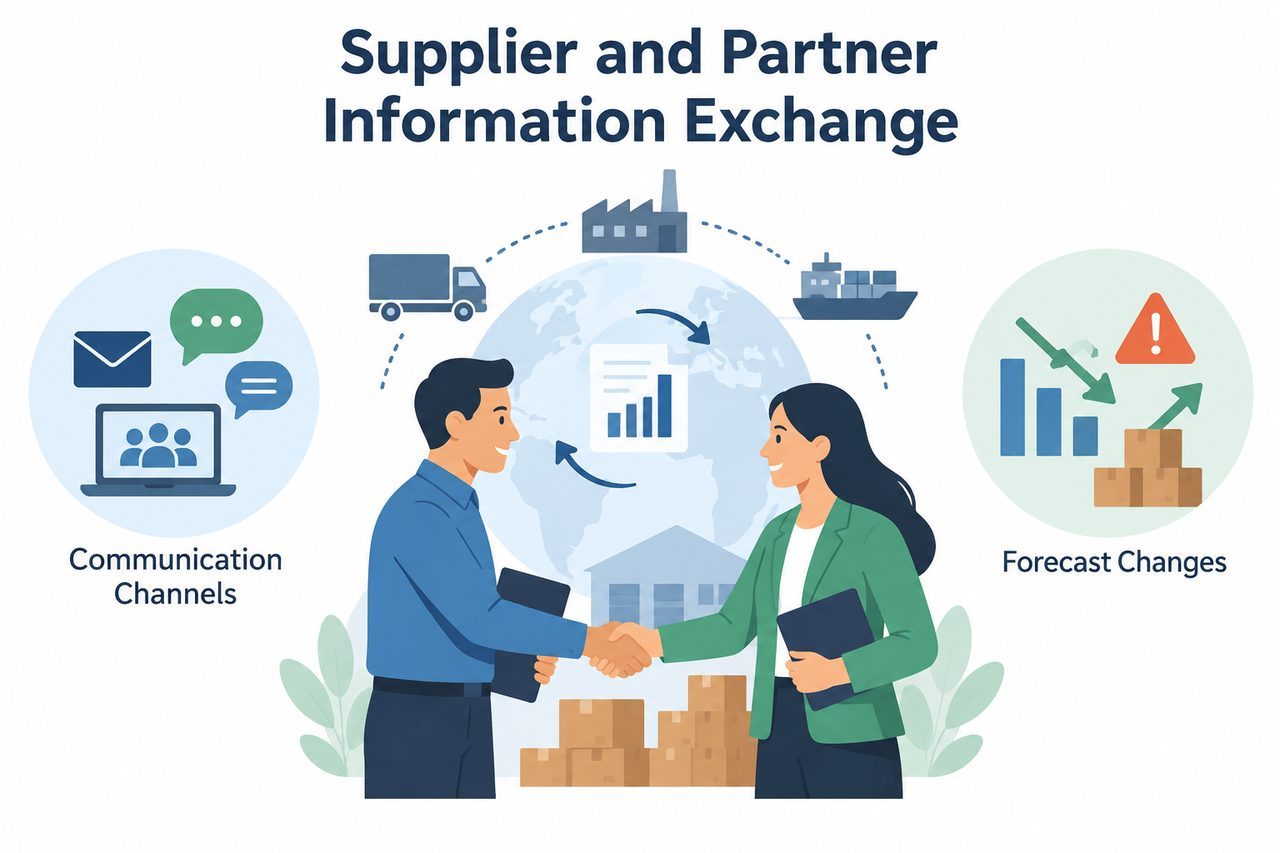
Building on the course so far, this section turns to the flow of information between your organization and its suppliers. You’ll first examine the communication channels currently used to exchange operational details, clarify expectations, and maintain alignment with external partners. Understanding how these channels function—and where information may be delayed, fragmented, or misunderstood—creates the foundation for responding effectively when conditions change.
The section then applies that foundation to high-pressure situations involving material scarcity and shifting forecasts. You’ll consider how suppliers respond to changing demand signals, what information they need to assess constraints, and how timely communication supports coordinated decisions. The lessons progress from understanding the mechanisms of routine information exchange to seeing how those mechanisms perform when supply and demand no longer follow the plan. We begin by taking a closer look at the supplier communication channels already in use.
-
Students mustView
-
Students mustView
-
-
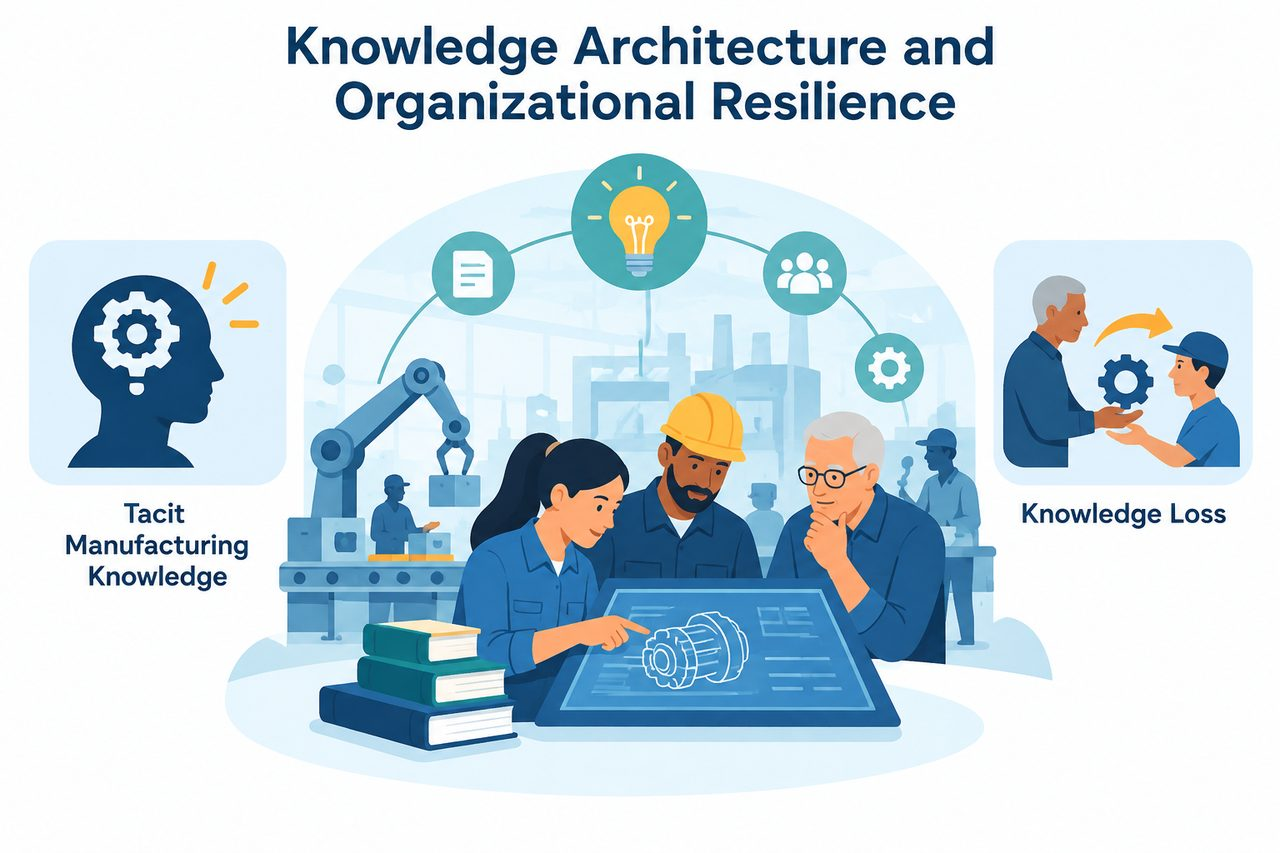
With the course foundations in place, this section turns to a less visible source of operational strength: the knowledge embedded in people, routines, and experience. You’ll examine tacit manufacturing knowledge—the practical judgment, techniques, and context that workers develop over time but that may never appear in formal documentation. Recognizing where this knowledge resides is essential because critical capabilities can depend on insights that are difficult to articulate or transfer.
From there, the focus shifts to what happens when experienced employees retire, change roles, or leave the organization. You’ll explore how workforce transitions can create knowledge gaps, weaken continuity, and increase operational risk. The lessons build from identifying hard-to-capture expertise to understanding the organizational consequences of losing it, establishing a foundation for more resilient knowledge practices. We begin by uncovering the manufacturing knowledge that often remains hidden in plain sight.
-
Students mustView
-
Students mustView
-
-
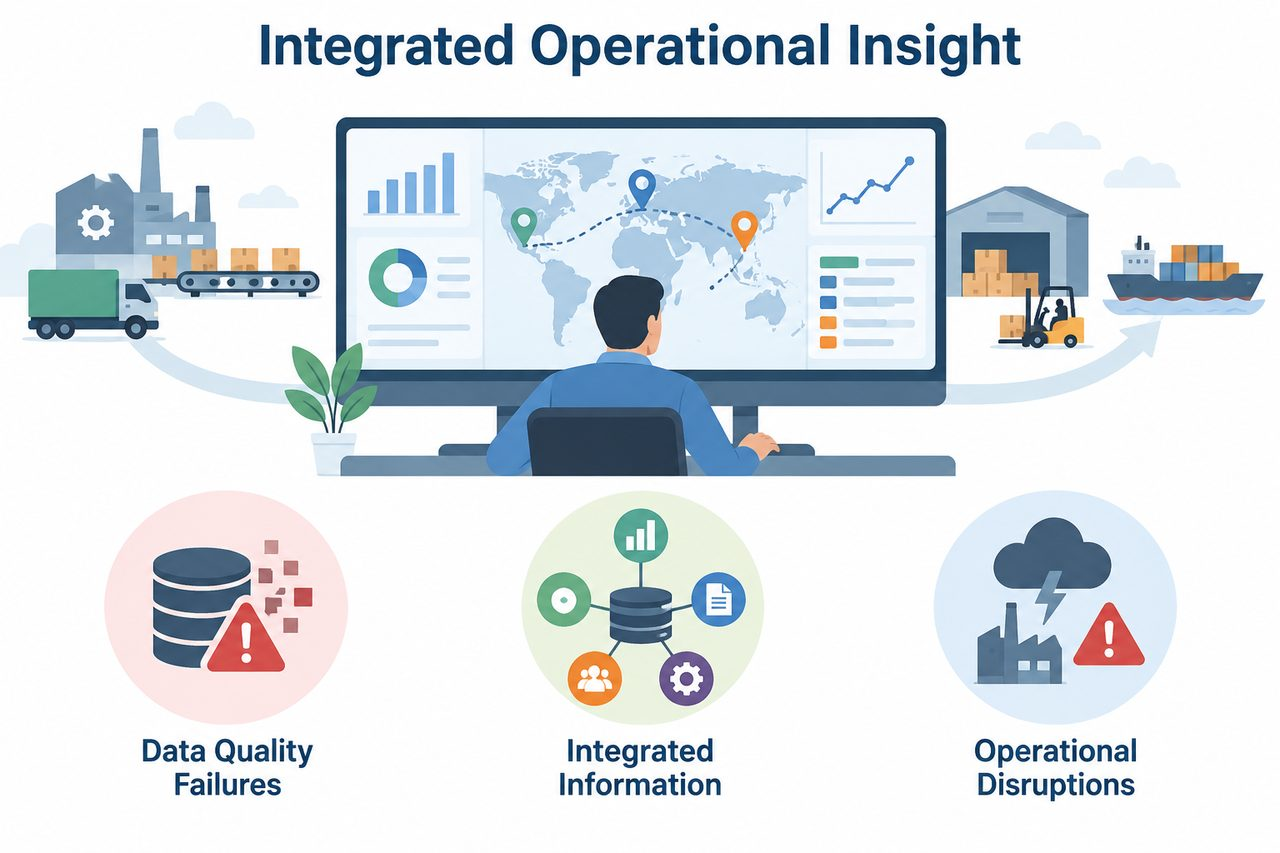
With the core operational foundations in place, this section turns to the challenge of developing a reliable, connected view of day-to-day performance. You’ll first examine how incomplete, inaccurate, or inconsistent data can distort decisions and create consequences across operations. From there, you’ll explore how information from different sources can be brought together to provide a more coherent picture of current conditions, dependencies, and emerging risks.
The section then applies that integrated perspective to operational disruptions, showing how dependable information supports faster assessment and more coordinated responses when normal activity is interrupted. Each lesson builds logically from identifying weaknesses in the underlying data, to creating a unified information view, to using that insight under pressure. We begin by looking at what happens when the data guiding operational decisions cannot be trusted.
-
Students mustView
-
Students mustView
-
Students mustView
-