

Sorry, this activity is currently hidden
Section outline
-
Introduction
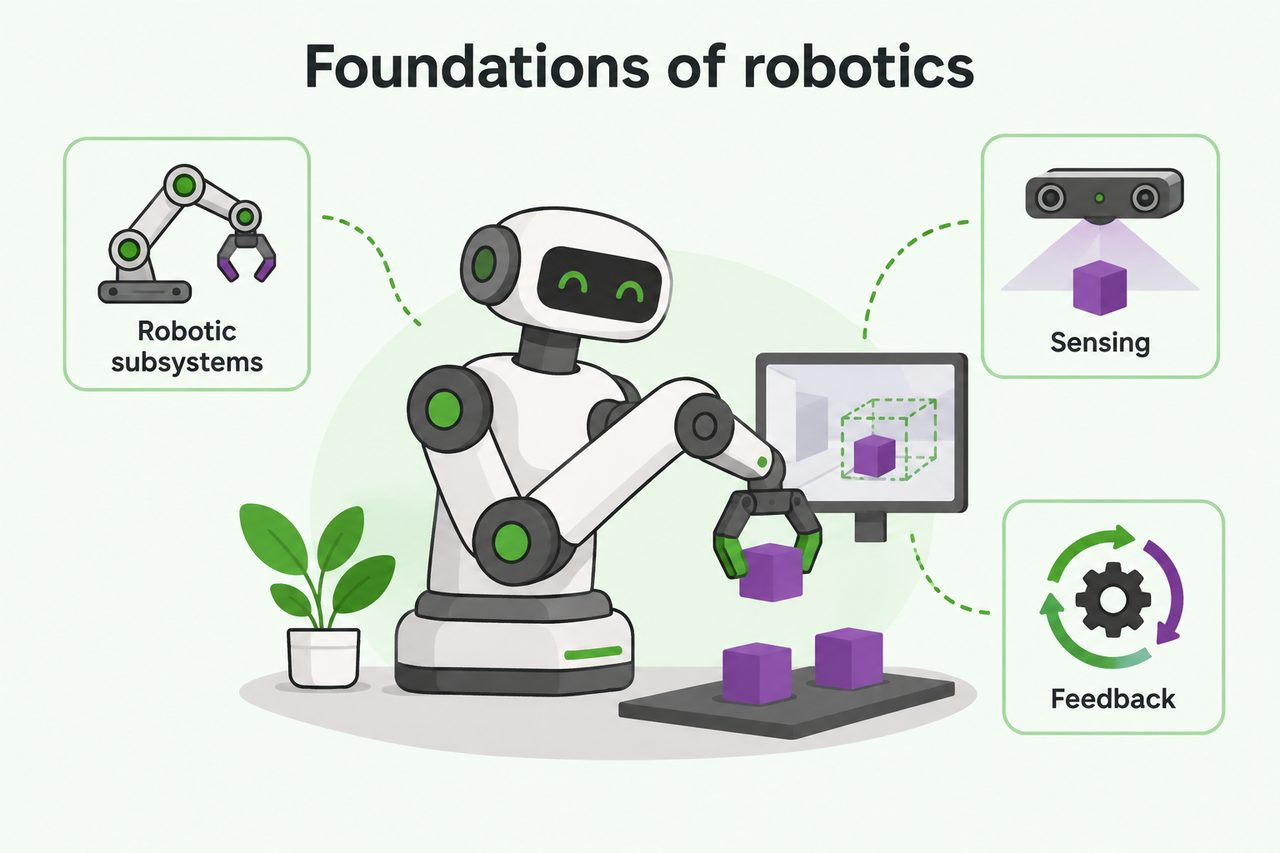
The laboratory robot’s equipment-delivery task provides a coherent basis for examining how physical configuration, sensory evidence and corrective action determine robotic capability. Through paper-based investigations, you will connect technological design with scientific observation, establishing the conceptual foundations for subsequent work on uncertainty monitoring and human metacognition. No programming experience or physical robotics hardware is required.
Learning Objectives
By the end of this section, you will be able to:
- Analyse the robot’s sensing, actuation, control and power subsystems, and use a two-link manipulator model to explain how embodiment, joint configuration, payload and mechanical compliance constrain reachable workspace, distinguishing forward from inverse kinematics.
- Interpret camera images, encoder readings and force measurements, distinguishing proprioceptive from exteroceptive information and annotating a laboratory map to represent noisy, ambiguous or incomplete observations.
- Apply feedback principles in a tabletop positioning exercise, recording reference states, measured states and corrective actions, and comparing open-loop and closed-loop responses in terms of overshoot, responsiveness and disturbance rejection.
-
Students mustView
-
Students mustReceive a grade
-
Students mustView
-
Students mustReceive a grade
-
Students mustView
-
Students mustReceive a grade
-
Students mustReceive a gradeReceive a passing grade
-
Introduction
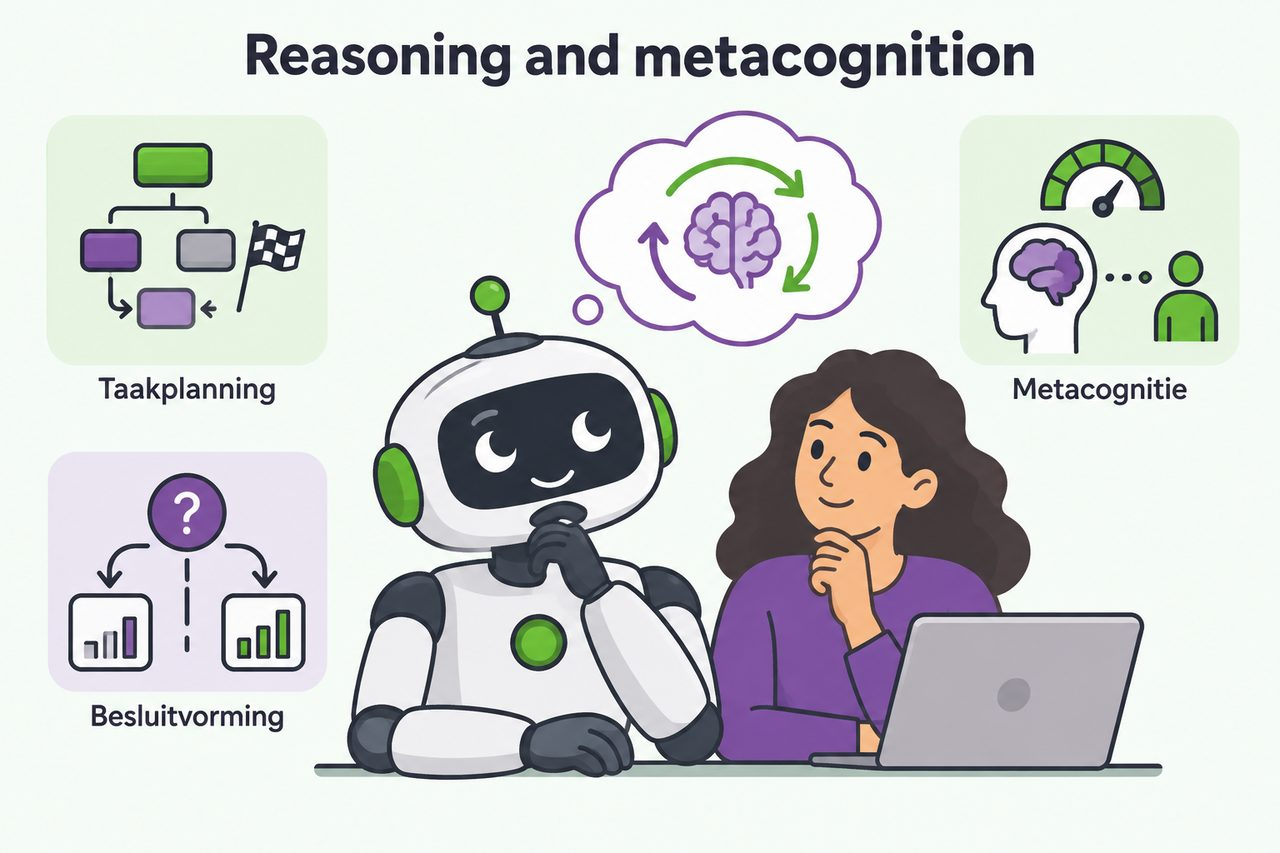
Building on the laboratory robot’s established physical and perceptual capabilities, this section develops the reasoning required to organise equipment delivery, respond to uncertainty and sustain meaningful researcher oversight. The continuing scenario connects technological decision-making with scientific accountability and human metacognition, distinguishing task execution from the monitoring and regulation of that execution.
Learning Objectives
By the end of this section, you will be able to:
- Construct an equipment-delivery plan using explicit representations, preconditions and anticipated outcomes, distinguishing task-level action selection from collision-free motion planning.
- Justify whether to proceed, obtain further evidence or defer to the researcher using supplied confidence estimates and instructional thresholds, without conflating classroom decision rules with validated operational safety criteria.
- Analyse confidence–correctness alignment and discrepancies between predicted and observed outcomes, then formulate a clarification exchange and allocate authority for confirmation, interruption and recovery, distinguishing functional self-monitoring from subjective experience.
-
Students mustView
-
Students mustReceive a grade
-
Students mustView
-
Students mustReceive a grade
-
Students mustView
-
Students mustReceive a grade
-
Students mustReceive a gradeReceive a passing grade
-
Introduction
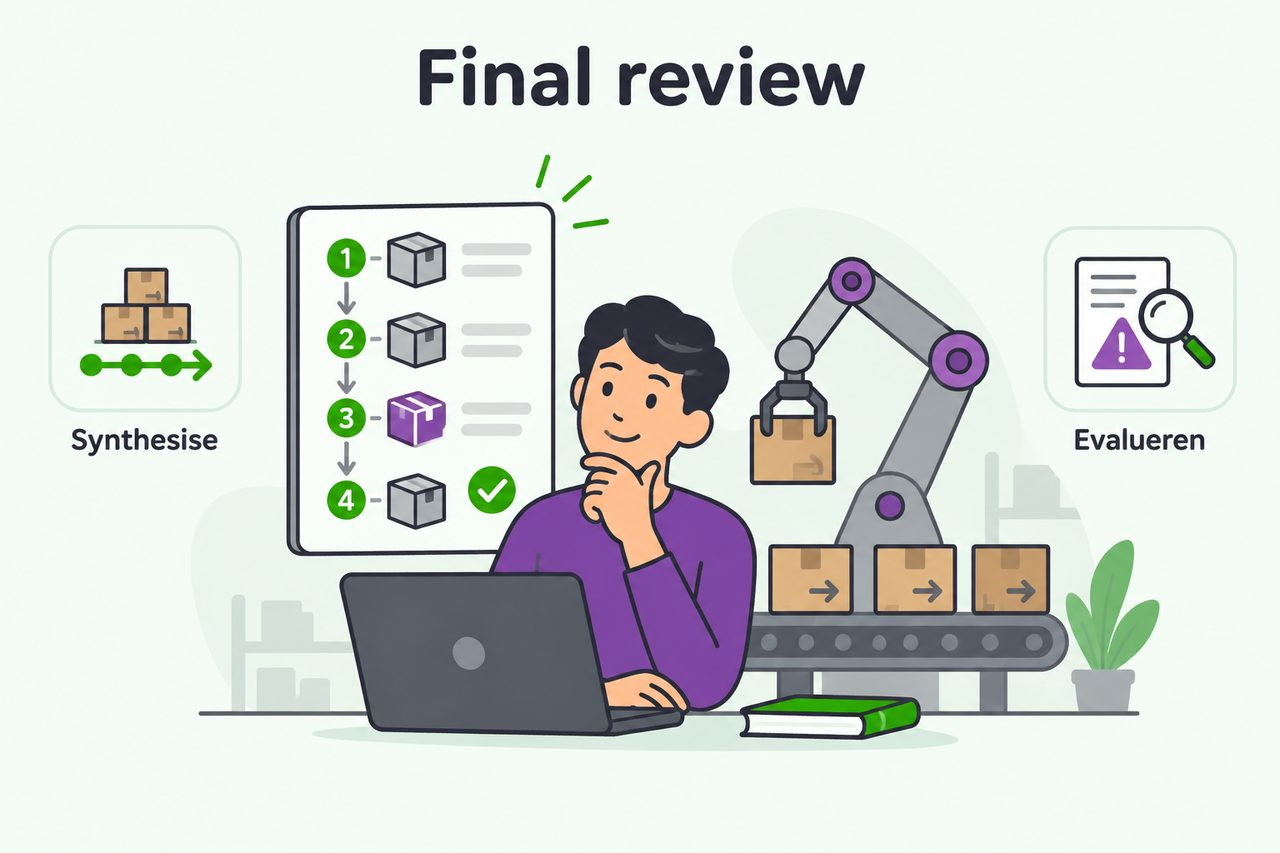
Building on the laboratory robot’s equipment-delivery task, this section consolidates the relationships between physical capability, autonomous decision-making and human oversight. Evaluating a final verification failure brings technological performance, scientific evidence and metacognitive regulation into a coherent account of responsible robotic assistance, while identifying priorities for further study.
Learning Objectives
By the end of this section, you will be able to:
- Synthesise evidence from the practical exercises to explain how embodiment, sensing, feedback, planning, uncertainty monitoring and human oversight jointly shape the equipment-delivery sequence.
- Diagnose an equipment-identity verification failure and justify the next observation, decision and human intervention without reconstructing the entire task plan.
- Identify one demonstrated capability and one unresolved question, then select a corresponding learning priority in robot programming, kinematics, perception, control or computational metacognition.
-
Students mustView
-
Students mustReceive a grade
-
Students mustView
-
Students mustReceive a grade