

Key Concept Review and Interactive Quiz
- View
Key Concepts of Energy Management Systems [20 Minutes]
Energy Management in Action: A Real-World Scenario
Imagine a bustling manufacturing plant within an industrial zone that's struggling with escalating energy costs and frequent power outages. As energy prices soar and environmental regulations tighten, the plant’s management is under tremendous pressure to optimize energy usage without hindering production. It's clear that implementing an Energy Management System (EMS) could be the key to overcoming these challenges. Understanding how to deploy and leverage an EMS in such a scenario isn't just about cutting costs; it's about ensuring sustainable operations and staying competitive. Let's explore what makes EMS indispensable in today's energy-conscious business environment.
Understanding the Foundations: Key Concepts and Terms
What is an Energy Management System (EMS)?
An Energy Management System (EMS) is a comprehensive approach that enables organizations to monitor, control, and improve their energy consumption. The primary objective is to establish systematic methods to save energy, reduce costs, and decrease carbon footprints.
Key Components:
-
Sensor Networks: Collect data on energy usage, environmental conditions, and operational states.
-
Data Analytics: Analyze data trends to identify inefficiencies and predict energy demands.
-
Control Mechanisms: Implement process adjustments to optimize energy use.
Why Are EMS Crucial?
In today's energy-intensive industries, EMS plays a vital role in maintaining operational efficiency while minimizing environmental impact. By adopting EMS, companies can achieve greater energy savings, improve regulatory compliance, and boost their sustainability credentials.
Frameworks and Standards
The primary frameworks guiding EMS include ISO 50001, which provides a model for establishing and maintaining an energy management system. The adoption of such standards aids organizations in strategically aligning their energy objectives with their business goals.
[[plantuml-c4-placeholder]]
Diving Deeper: Best Practices and Challenges
Best Practices for Effective EMS Implementation
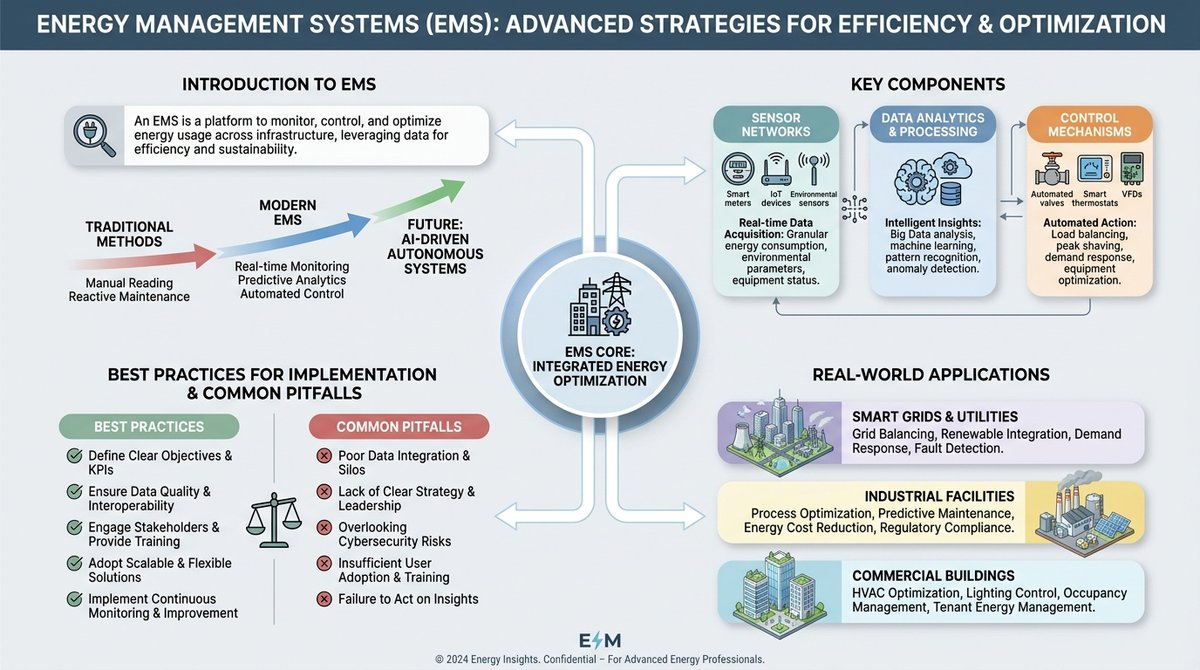
- Engagement from Top Management: A successful EMS requires buy-in from leadership to drive cultural change and allocate necessary resources.
- Baseline Energy Assessment: Establishing a detailed understanding of current energy usage patterns to set realistic goals and benchmarks.
- Integration with Existing Systems: Seamlessly integrating EMS with existing IT and operational infrastructures to enhance data collection and process automation.
Common Pitfalls and Misconceptions
-
Underestimating Training Needs: Failing to adequately train staff can lead to underutilized systems and missed opportunities for energy savings.
-
Neglecting Maintenance: Regular system maintenance is crucial to prevent degradation in performance and ensure accurate data collection.
-
Assuming Quick ROI: Significant energy savings might take time to manifest as initial investment in technology and process changes stabilize.
Typical Misconceptions
A prevalent misconception is that implementing an EMS automatically guarantees immediate reductions in energy use. However, realizing these benefits requires continual monitoring and adjustment based on performance data.
Real-World Applications: Energy Sector Examples
Example 1: A Chemical Manufacturing Facility
In a leading chemical facility, the implementation of an EMS resulted in a 20% reduction in energy costs over three years.
-
Step 1: Conduct an energy audit to identify high-energy consuming processes.
-
Step 2: Implement sensor networks to monitor real-time energy usage and adjust operations dynamically.
-
Step 3: Use data analytics to tailor energy conservation measures that optimize production cycles.
Through these measures, the facility not only reduced energy costs but also enhanced production reliability, leading to increased profitability.
Example 2: A Data Processing Center
A data processing center struggling with high energy consumption and cooling inefficiencies adopted EMS to tackle these issues.
-
Step 1: Track energy usage patterns across different times and operational states.
-
Step 2: Use the insights to adjust cooling systems and minimize idling of processing units during non-peak hours.
-
Step 3: Integrate the EMS findings with a broader sustainability strategy to support corporate social responsibility goals.
The EMS enabled a significant cut in energy wastage, ensuring the facility operated within optimal environmental standards.
Bringing It All Together: Key Insights and Looking Ahead
By examining these concepts and applications, it's evident that EMS plays a crucial role in optimizing energy use and promoting sustainability in the energy sector. The adoption of EMS requires careful planning, continuous monitoring, and a commitment to energy goals, aligning perfectly with broader business strategies.
Next, we'll build on this by exploring Group Scenario Analysis and Discussion to further deepen our understanding of real-world energy management challenges.