

Overview of Energy Management Systems
- View
Understanding Energy Management Systems in the Energy Sector
The Importance of Energy Management Systems Today
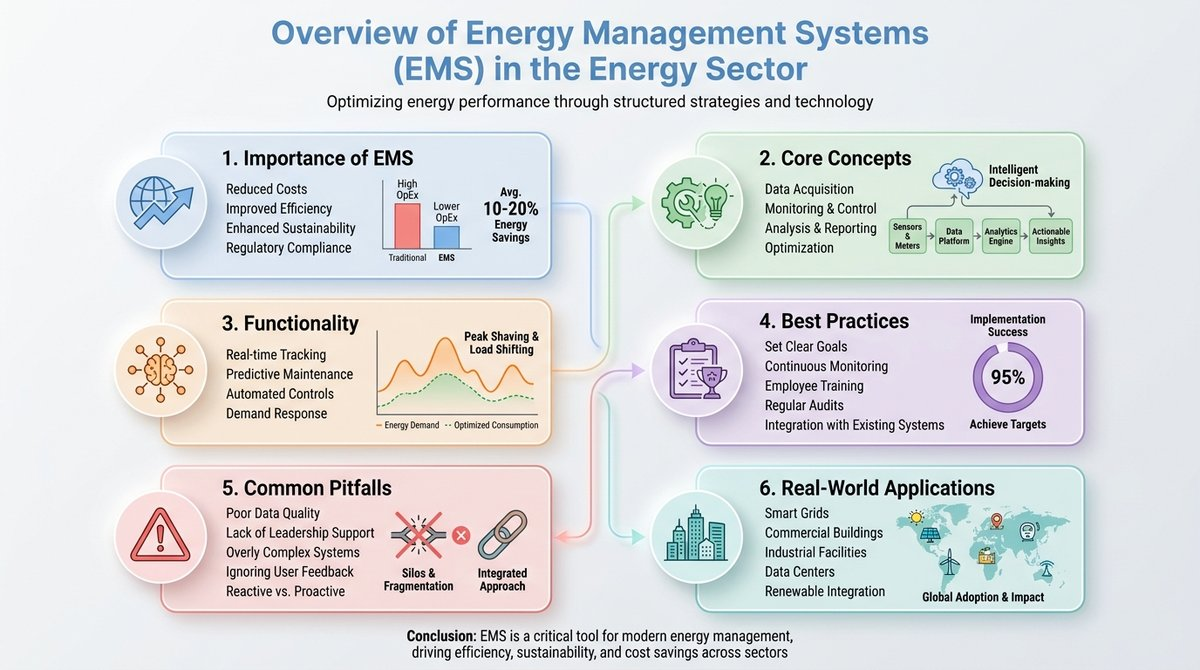
In the rapidly evolving energy sector, businesses increasingly face the challenge of optimizing energy usage to enhance profitability, meet regulatory requirements, and reduce environmental impact. Energy Management Systems (EMS) provide a strategic approach to address these challenges. By integrating sophisticated technologies and analytics, EMS helps organizations monitor, control, and optimize their energy consumption. The relevance of EMS is underscored by the rising cost of energy and increasing focus on sustainability. So, what makes EMS crucial now? Let's delve into the core concepts to set the stage.
Core Concepts and Definitions
Understanding Energy Management Systems starts with clarity on key terms and principles. An Energy Management System (EMS) is a combination of hardware, software, and processes designed to manage energy use efficiently. It aims to:
-
Monitor energy consumption in real-time.
-
Analyze energy data to optimize usage.
-
Control operational processes to reduce waste.
Key Components of EMS:
-
Metering and Monitoring: Collects data on energy usage across various systems.
-
Control Systems: Automated controls that adjust operations based on set parameters.
-
Data Analytics: Software tools that analyze patterns and suggest improvements.
Why EMS Matters:
-
Cost Efficiency: Reduces energy expenses by identifying waste and optimizing use.
-
Regulatory Compliance: Helps meet statutory regulations for energy consumption.
-
Sustainability Goals: Supports efforts to minimize carbon footprint and promote green practices.
Deep Dive into Energy Management Systems
Now, let's explore in greater detail how EMS functions, its best practices, common pitfalls, and misconceptions.
Functionality of EMS
Energy Management Systems serve as a comprehensive solution integrating multiple technologies. Here’s how:
- Data Collection and Analysis: EMS use sensors and smart meters to gather data, providing real-time insights into energy consumption patterns.
- Optimization Tools: These systems employ predictive analytics and algorithms to suggest operational adjustments, leading to energy savings.
- Automation and Control: By automating responses to energy data, EMS can adjust HVAC systems, lighting, and more to ensure energy-efficient operations.
Best Practices
-
Regular Audits: Conduct energy audits to identify potential areas for reduction.
-
Adaptive Controls: Implement adaptive control mechanisms to respond dynamically to energy needs.
-
Stakeholder Engagement: Involve management teams in strategic discussions about energy policies and savings targets.
Common Pitfalls and Misconceptions
Pitfall: Ignoring Long-term Savings
-
Why it happens: Organizations often focus on upfront costs rather than long-term financial benefits EMS provides.
-
How to avoid it: Develop a detailed ROI analysis to highlight long-term savings and efficiency gains.
Misconception: EMS Only Benefits Large Enterprises
- Clarification: EMS solutions can be scaled to fit small to medium-sized enterprises, providing proportional efficiency improvements and cost savings.
Here’s a table comparing the core aspects of an EMS against traditional energy management practices:
| Aspect | Energy Management Systems (EMS) | Traditional Practices |
|---|---|---|
| Data Collection | Automated, real-time | Manual, periodic |
| Control and Automation | Intelligent, responsive | Limited, often manual |
| Outcome Predictability | High, data-driven improvements | Variable, often subjective analysis |
| Scalability | Flexible, supports growth | Often rigid, challenging to expand |
Real-World Applications in the Energy Sector
Example 1: Manufacturing Plant Optimization
A manufacturing facility integrated EMS to monitor and manage its energy utilization across multiple departments. Using data from EMS, the plant identified that 20% of energy consumption was due to idle machinery. Implementing automated shutdowns during non-peak hours led to a 15% reduction in energy costs. This example underscores how EMS can enhance operational efficiency and support sustainability goals.
Example 2: Commercial Building Efficiency
A large commercial building deployed EMS to control HVAC and lighting systems. By optimizing temperature settings based on occupancy data and using daylight sensors for lighting, the building decreased energy usage by 25%. This not only reduced costs but also improved tenant satisfaction by maintaining optimal comfort levels. This example illustrates EMS's ability to deliver both economic and experiential benefits.
Synthesis: Reflecting on the Power of EMS
In summary, Energy Management Systems stand out as a vital component in today's energy landscape. They offer dynamic solutions that provide cost savings, regulatory compliance, and environmental benefits. By adopting EMS, organizations can harness powerful data and automation tools to make informed, efficient decisions.
Next, we'll build on this by exploring Advanced Techniques in Energy Efficiency.