

Typical Transactions and Processes
- View
Understanding Securities Borrowing and Lending
Imagine a financial analyst at Asset Management Ltd., responsible for ensuring the company's portfolio performs optimally. One day, an opportunity arises to profit from an anticipated decline in a stock's price. To capitalize on this, the analyst needs to borrow securities through a process known as securities lending. But what exactly happens during these transactions? Why do they matter in the world of banking, broking, and asset management? This lesson will shed light on typical transactions and processes involved in securities borrowing and lending, providing valuable insights into this pivotal financial practice.
What is Securities Borrowing and Lending?
Securities borrowing and lending is a practice that enables financial institutions, such as banks, brokers, and asset managers, to temporarily transfer securities to another party. The borrower typically uses the securities to:
-
Cover a short position.
-
Enhance portfolio returns.
-
Facilitate settlement of trades.
Conversely, the lender benefits by earning a fee — essentially renting out the securities. This process is crucial for ensuring liquidity in the market and supporting various investment strategies.
Key Elements
-
Securities: Assets that can be lent or borrowed, such as stocks, bonds, or Treasuries.
-
Collateral: Cash or securities given by the borrower to the lender to secure the loan.
-
Loan Fee: A payment made by the borrower to the lender for the use of securities.
-
Term: Duration for which securities are lent, which can be open (no fixed term) or fixed.
Navigating Through the Transaction Process
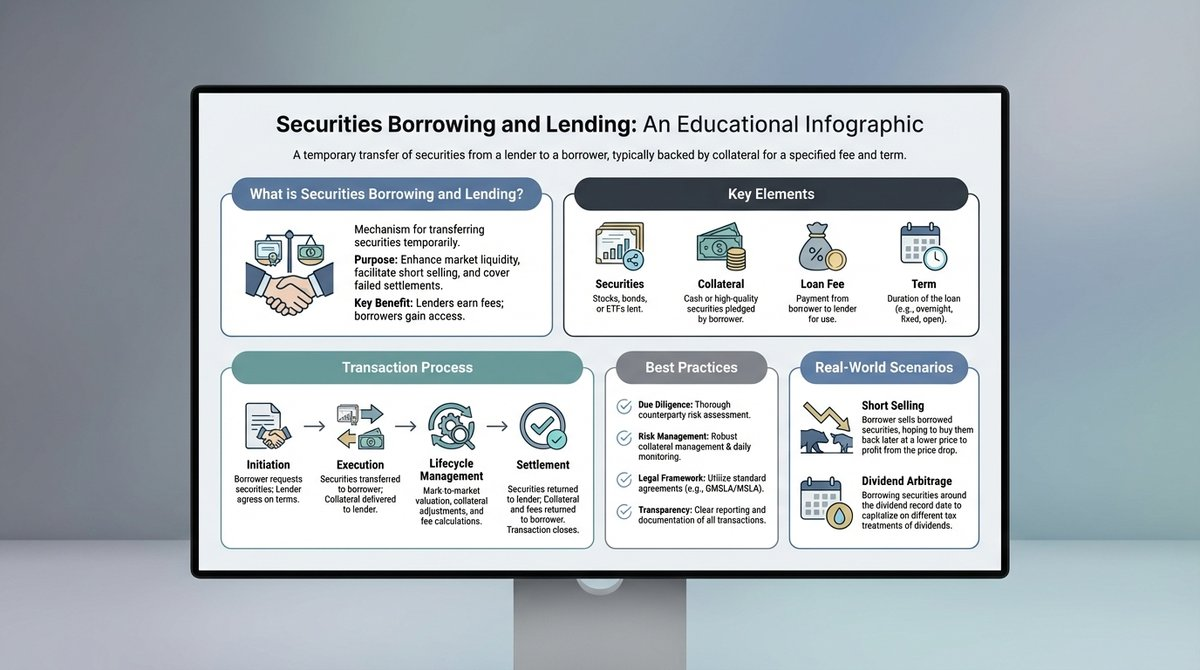
To understand the mechanics of securities lending, let’s delve into the step-by-step process and intricacies involved in a typical transaction.
Initiating the Transaction
The process begins when a borrower expresses interest in specific securities. The request is usually facilitated through a lending agent or a central securities depository, who identifies potential lenders. Upon matching both parties' needs, negotiations on terms and conditions commence, including the loan fee, type of collateral, and loan period.
Executing the Agreement
Upon reaching mutual consent, the parties execute a securities lending agreement. This legally binding document outlines roles, responsibilities, and obligations of each party. The agreement ensures the loaned securities are adequately backed by collateral, usually a percentage above the market value to protect against market fluctuations.
Managing the Lifecycle
Throughout the loan period, both parties monitor the agreement to ensure compliance. Key activities during this phase include:
-
Collateral Management: Continuous assessment of collateral value and adjustments to maintain required levels.
-
Corporate Actions: Management of dividends, interest payments, or stock splits involving loaned securities.
-
Recalls and Returns: If the lender needs to retrieve their securities, they may recall the loan. The borrower must return the securities within a specified notice period.
Settling the Transaction
Upon maturity of the agreement, the borrower returns the loaned securities, and the lender releases the collateral. Proper settlement is crucial to maintain a trustworthy reputation in the financial market.
Common Practices and Pitfalls in Securities Lending
When engaging in securities lending, financial institutions must adhere to best practices to optimize transactions and mitigate risks.
Best Practices
-
Robust Risk Management: Regular collateral evaluation and adjustment to minimize exposure.
-
Transparency and Reporting: Clear documentation and communication between all parties involved.
-
Diversification of Lenders/Borrowers: Reducing reliance on a single counterparty to minimize risk.
Common Pitfalls
-
Insufficient Collateral: Over-reliance on automated systems without manual checks may lead to under-collateralization.
-
Incomplete Documentation: Ambiguities in contracts can result in disputes and potential financial loss.
-
Neglecting Market Volatility: Failure to monitor market conditions may impact the collateral's adequacy and the security's value.
Real-World Scenarios in Securities Lending
Example 1: Bank Secures Cash Flow through Securities Lending
A major bank, aiming to enhance liquidity while meeting regulatory capital requirements, enters the securities lending market. By lending securities from its proprietary trading book, the bank receives cash collateral in excess of the loan's value. This facilitates cash flow management and improves capital reserves, demonstrating how securities lending supports banking stability.
Example 2: Hedge Fund Deploys Short Selling Strategy
A hedge fund predicts an underperformance in Technology Inc.'s stock price and decides to short sell. By borrowing shares through a broker, the fund sells them at the current market rate. When the forecasted price drop materializes, the fund repurchases the shares at a lower price, returning them to the lender while pocketing the difference. This highlights the strategic use of securities borrowing in achieving investment objectives.
Conclusion: Mastering Typical Securities Lending Transactions
Securities borrowing and lending play a pivotal role in modern finance by enabling liquidity, facilitating short sales, and enhancing portfolio returns. Mastery of these typical transactions requires an understanding of their processes, the strategic challenges they address, and the common pitfalls that can arise. By following best practices and maintaining robust risk management, you will enhance your ability to successfully engage in this vital financial service, driving positive outcomes for your organization.