

Exploring Future Trends and Practical Application
- View
Future Trends and Practical Applications in Energy Management Systems
The Urgency of Embracing Change in Energy Management
Imagine a scenario where a multinational corporation faces skyrocketing energy costs and unpredictable consumption patterns that jeopardize its operational efficiency and bottom line. In today’s rapidly evolving energy landscape, such situations are becoming alarmingly common. The integration of energy management systems (EMS) is no longer just a strategic advantage; it’s a necessity for businesses looking to optimize their energy usage, reduce costs, and enhance sustainability efforts.
Why is this important now more than ever? The energy sector is experiencing unprecedented changes driven by technological advancements, regulatory shifts, and growing consumer expectations for eco-friendly operations. This lesson focuses on exploring the future trends in EMS and how they can be practically applied in the B2B energy sector to stay ahead of these transformations.
Key Concepts in Future Energy Management
Understanding Energy Management Systems
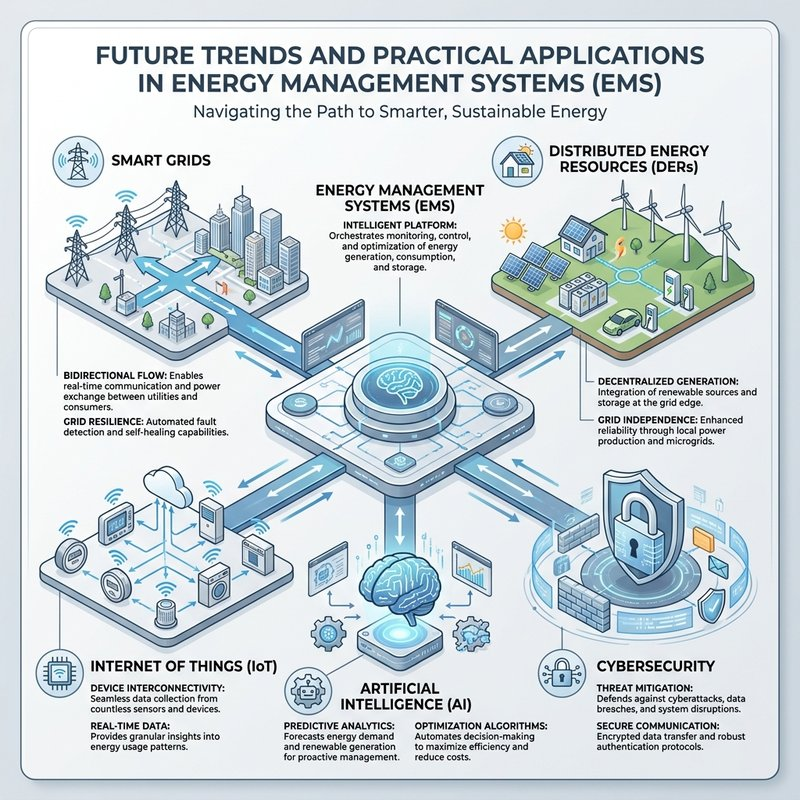
Energy Management Systems (EMS) are sophisticated platforms that enable businesses to monitor, control, and optimize their energy consumption. These systems bring together hardware, software, and human resources to improve energy efficiency and reduce waste. As we delve into future trends, we build upon this foundational knowledge to explore how emerging technologies can enhance EMS capabilities.
Smart Grids are one emerging technology, modernizing our electrical grid's infrastructure to allow for two-way communication and greater operational efficiency. EMS integrated with smart grids offer real-time data exchange, empowering businesses to make informed decisions.
The Role of the Internet of Things (IoT)
The Internet of Things (IoT) is pivotal in advancing EMS. By embedding sensors and smart devices across a facility, IoT enables continuous monitoring and data collection. This data-driven approach allows for predictive maintenance, immediate anomaly detection, and tailored energy consumption strategies.
Deep Dive into Emerging Trends
Artificial Intelligence and Machine Learning
AI and machine learning are transforming how energy management systems predict and respond to energy needs. By analyzing vast datasets, these technologies can provide insights into consumption patterns, predict future usage, and suggest optimization strategies.
Applications of AI in EMS
-
Predictive Maintenance: AI models can predict equipment failures before they occur, reducing downtime and maintenance costs.
-
Demand Response: Optimizes energy use during peak periods by automating downscaling or shutting off non-essential equipment.
Distributed Energy Resources (DERs)
The rise of Distributed Energy Resources (DERs), such as solar panels and energy storage systems, offers businesses greater control over their energy production and consumption. EMS interoperability with DERs ensures efficient distribution and usage of locally generated energy resources.
Common Pitfalls in Deploying DERs include inadequate integration with existing systems and insufficient bandwidth to handle new data flows. Each installation must be taken with a tailored approach to organizational needs and infrastructure capabilities.
| Challenge | Description | Solution |
|---|---|---|
| Integration Complexity | Many systems and protocols are involved in integrating DERs into existing networks. | Utilize middleware solutions that can smoothly connect disparate systems and ensure cohesive operation. |
| Data Management | The influx of data from DERs requires robust data handling and processing capabilities. | Implement scalable cloud-based data storage solutions that allow for real-time analysis and secure data handling. |
| Cost-Benefit Analysis | Upfront costs can be prohibitive for DER installation compared to traditional energy sources. | Conduct thorough cost-benefit analyses considering long-term savings in energy costs and possible incentives or tax breaks associated with renewable energy adoption. |
Cybersecurity in Energy Management
As EMS become more integrated with online networks, cybersecurity becomes paramount. Protecting sensitive data and ensuring the reliability of energy supply chains are critical concerns.
Recommendations for Enhancing Cybersecurity
-
Implementing Security Protocols: Regularly updated firewalls and encryption methods.
-
Employee Training: Ensuring all stakeholders understand best practices in cybersecurity to avoid breaches.
Practical Application: Real-World Examples
Success Story: Smart Factory Implementation
A prominent automotive manufacturer reduced its energy costs by 30% within a year by integrating IoT devices into its production line. IoT sensors provided real-time data analytics, identifying energy wastage points and responding swiftly to demand fluctuations.
This integration did not just reduce costs; it enhanced the company's sustainability profile, leading to greater market competitiveness.
Disaster Resilience through EMS
In another instance, a coastal data center used EMS integrated with AI-driven forecasting tools to predict and efficiently manage energy requirements in anticipation of an approaching hurricane. Not only did it safeguard crucial data during power disruptions, but it also highlighted EMS as a vital tool in disaster responsiveness and resilience planning.
Synthesizing Future Directions in Energy Management
As we conclude this section, several takeaways emerge:
-
Emerging Technologies: IoT, AI, and DERs are revolutionizing how energy is managed, offering significant efficiency and cost-saving opportunities.
-
Holistic Integration: Combining these technologies into existing systems poses challenges but also great potential for innovation in meeting energy needs sustainably.
-
Proactive Cybersecurity: As technology advances, so must our cybersecurity strategies, ensuring safe and reliable energy management systems.
Adopting these innovations sets the stage for businesses to not only reduce costs and improve efficiencies but also lead in the global push for sustainable practice. As these systems become ever more integrated into everyday operations, the expertise gained here serves as a robust foundation for mastering advanced energy management practices.
[[End of Section Visual: Innovative System Mindmap]]
Reflecting on this learning journey, you are now equipped with the knowledge to navigate the future energy landscape confidently. Embrace these tools not just as a way to drive business efficiency but as partners in aligning economic goals with sustainability imperatives.✨