

Recap of Core Concepts
- View
Understanding Securities Borrowing and Lending
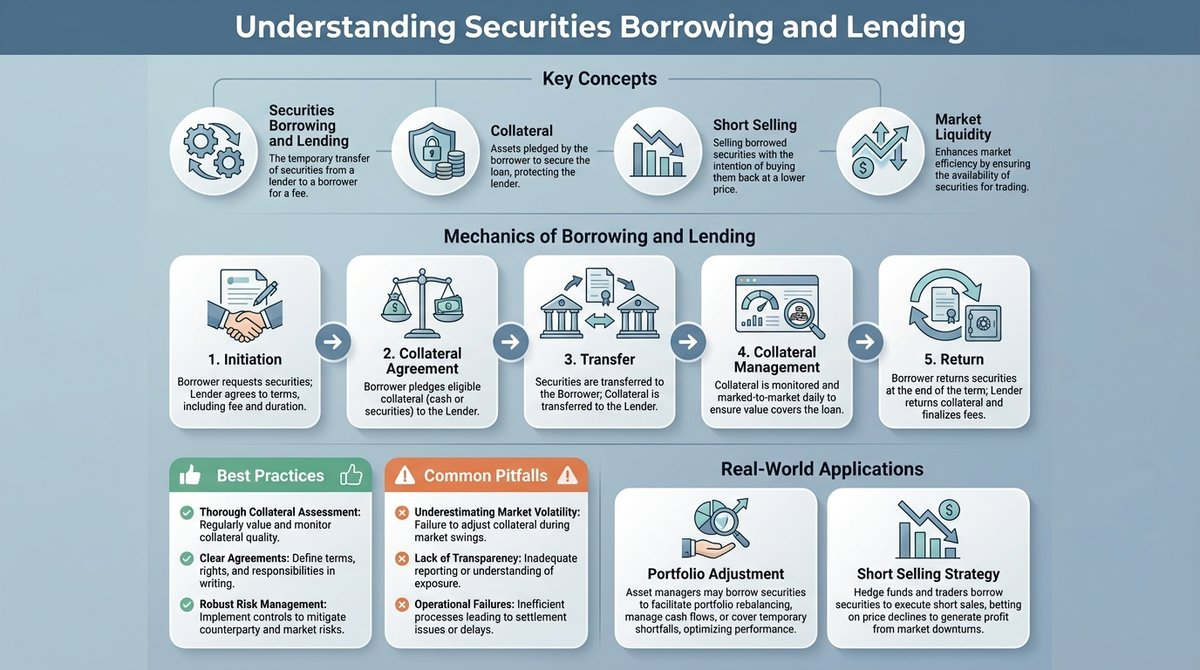
Imagine you're a portfolio manager at an asset management firm; you deal with buying and selling stocks regularly. However, sometimes you encounter a situation where you don't own a particular stock in your portfolio but need to deliver it due to an open sale or to hedge a position. This is where securities borrowing and lending becomes essential. It's a crucial component of the financial markets, allowing for more fluid trading, hedging, and arbitrage strategies.
Why Securities Borrowing and Lending Matters
In the world of banking, broking, and asset management, the ability to borrow and lend securities enables institutions to meet short-selling demands, facilitate market-making activities, and manage risk more dynamically. It's instrumental in maintaining market liquidity and ensuring the seamless operation of financial systems. Now, let's delve into the fundamental concepts that underpin securities borrowing and lending.
Key Concepts and Definitions
Securities Borrowing and Lending: This is a process where a holder of securities (the lender) temporarily transfers them to another party (the borrower) in exchange for collateral. The borrower agrees to return the securities on a negotiated date, with interest or fees paid to the lender for the loan period.
-
Collateral: Assets or securities pledged by the borrower to the lender to mitigate the risk of default. This typically exceeds the value of the borrowed securities to account for market volatility.
-
Short Selling: A strategy where traders sell securities they do not own, betting that the price will decline, allowing them to buy back at a lower price. Securities borrowing is crucial for executing short sales.
-
Market Liquidity: The ease with which securities can be bought and sold without impacting their price. Securities lending increases liquidity by making more stocks available for trade.
The Mechanics of Borrowing and Lending
The heart of securities borrowing and lending lies in the collateral management process. When a borrower requires specific securities, they approach a lender, often facilitated by a broker or custodian. The borrower must provide acceptable collateral, which could be cash or other securities, ensuring they meet the lender's requirements and regulatory standards.
Here's a simplified breakdown of this process:
- Initiation: The borrower identifies the securities needed and contacts a lender willing to provide them.
- Collateral Agreement: The borrower offers collateral, typically exceeding the value of the borrowed securities.
- Transfer: The lender transfers the securities to the borrower's account, allowing them to fulfill their trading or hedging strategy.
- Collateral Management: Throughout the loan period, the value of the collateral is regularly assessed and adjusted to account for market fluctuations.
- Return: At the end of the agreed period, the borrower returns the securities to the lender and retrieves their collateral.
Best Practices and Common Missteps
Best Practices:
-
Thorough Collateral Assessment: Regularly evaluate the collateral value to manage risk effectively.
-
Clear Agreements: Establish clear terms in the lending contract to prevent misunderstandings.
Common Pitfalls:
-
Underestimating Market Volatility: Failing to adjust collateral in response to market changes can lead to losses.
-
Lack of Transparency: Not clearly communicating the terms and conditions could lead to disputes and financial losses.
Real-World Applications in Finance
Example 1: Portfolio Adjustment
A mutual fund needs to adjust its portfolio by selling a high-performing stock. However, all shares of this stock are currently lent out. Through securities lending, they can temporarily retrieve shares, enabling them to execute their strategy without delay.
Example 2: Short Selling Strategy
An institutional investor anticipates a decline in the stock price of a tech company and decides to short sell. They borrow the necessary shares through a securities lending agreement, sell them at the current market price, and plan to repurchase at a lower price.
Key Takeaways for Asset Managers
-
Facilitating Strategic Transactions: Securities lending allows for the execution of complex strategies that demand timely access to specific securities.
-
Enhancing Market Liquidity: By providing more stocks for borrowing, it contributes to a balanced market environment.
-
Risk Mitigation through Collateral: Proper collateral management ensures that both parties manage risks effectively, maintaining the integrity of their transactions.
Up next: Application in Real-World Scenarios — where this becomes even more practical.