

Defining Data Governance
- View
1.1: Defining Data Governance
Imagine you're a manager at HEMA, overseeing a vast array of products and customer interactions. You notice discrepancies in sales data across different branches, which raises questions about data accuracy. Addressing this requires a strong grasp of data governance, ensuring your data is consistent, reliable, and secure. This lesson introduces you to data governance, laying the foundation for effectively managing and utilizing data within an organization like HEMA.
To understand why data governance matters, let's start with the basics. Data governance is the framework for managing availability, usability, integrity, and security of data in enterprise systems. It involves setting policies and procedures that define who can take what actions with data, under what circumstances, and using what methods. In earlier lessons, we discussed the fundamental importance of maintaining data quality — a key aspect now governed by these frameworks. Think of data governance as the rules of the road for your data. Just as traffic lights and signs keep drivers safe and traffic flowing smoothly, data governance keeps your organization’s data trustworthy and effective.
Digging deeper into data governance, it's essential to break down its key components: data stewardship, data quality, and compliance. Data stewardship involves assigning roles and responsibilities for managing data. Just as each department in HEMA has its specific duties, data stewards are responsible for the accuracy and accessibility of data. Data quality ensures data is accurate and reliable, akin to ensuring shelves are stocked with the right products in the right order. Compliance, on the other hand, ensures that the organization meets legal and regulatory requirements, much like how stores need to adhere to consumer protection regulations.
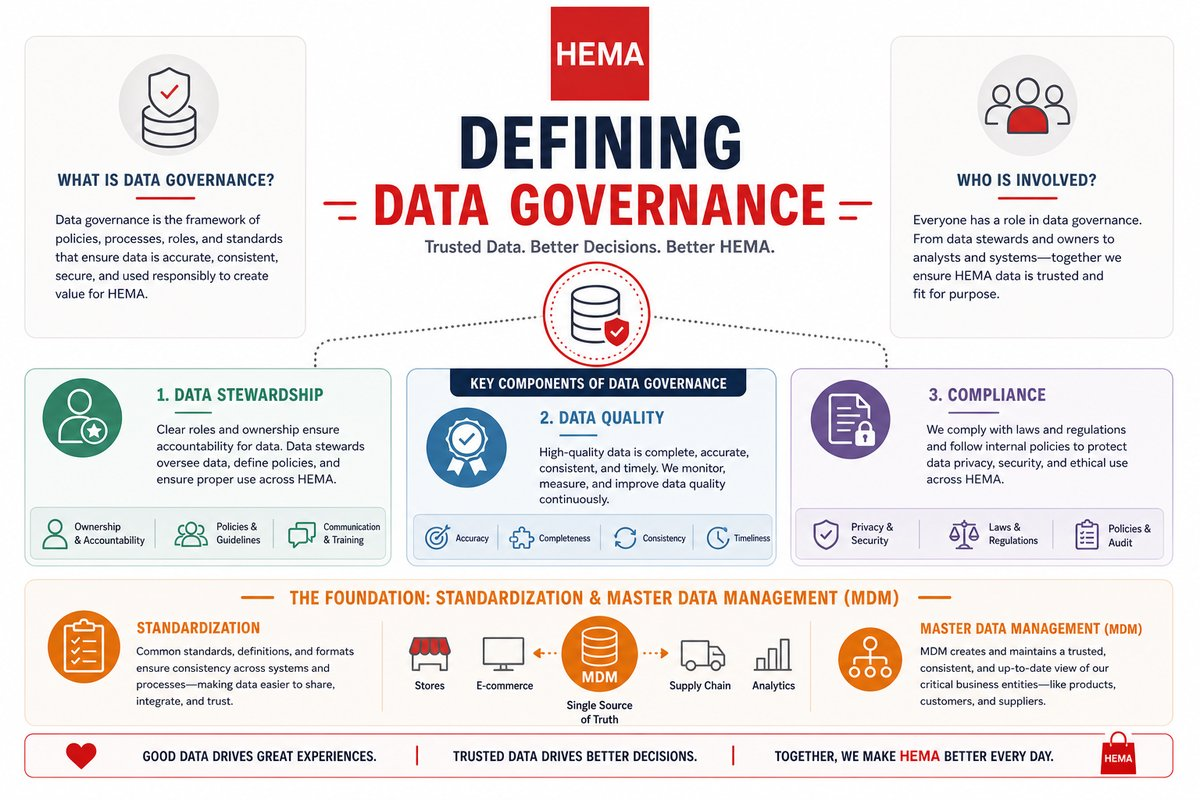
For HEMA, implementing data governance effectively involves standardizing processes across stores to ensure all data—from sales figures to customer feedback—is captured consistently. For example, consistent labeling and categorization of products can alleviate discrepancies and aid in data analysis. Additionally, implementing automated checks for data accuracy can minimize human error and enhance the reliability of reports sent to executive teams.
Consider HEMA’s approach to managing data quality through a master data management (MDM) system. This system acts as a centralized platform ensuring consistent data definitions across all platforms. For instance, if customer data is entered inconsistently across different systems, the MDM system can flag discrepancies and trigger corrective actions. Implementing such systems not only enhances data reliability but also provides actionable insights, fostering data-driven decision-making across departments.
In summary, data governance is crucial for ensuring that data within an organization is consistent, reliable, and secure. As we delve into understanding the frameworks in the next lesson, remember that effective data governance lays the groundwork for improved data management practices at HEMA. This foundation will support the store's goals, such as enhancing customer satisfaction and driving business growth.