

Doelgroeptargeting in de Detacheringsbranche
- View
Understanding Target Audience Strategies in the Staffing Industry
In the constantly evolving landscape of the staffing industry, one of the most impactful challenges businesses face is effective audience targeting. For example, consider a staffing company that has been operating in a broad market for years but is now struggling with market dilution and mounting competition. This firm decides to reevaluate its target audience to regain focus and improve its market position. By homing in on specific segments of the market, they can tailor their services to meet the unique needs of these groups, leading to better client relationships and increased profitability. This lesson delves into how such strategic targeting can transform operational marketing efforts, making them more effective and results-driven.
Foundations of Target Audience Definition
Target Audience Targeting involves identifying and understanding the specific groups within a larger market that a business aims to serve. This process begins with market segmentation, a critical strategy in which a larger market is divided into smaller, more manageable segments based on certain characteristics such as behavior, demographics, or specific needs. The goal is to identify and understand those segments that offer the greatest potential for growth and alignment with the business's strengths and goals.
In staffing, segmentation can be adjusted based on factors such as occupational field, geographic regions, and recruitment needs specific to certain industries. These criteria help businesses focus their marketing efforts on segments where they have the most substantial competitive edge. A successful targeting strategy ensures that marketing resources are invested efficiently and that messaging resonates powerfully with the audience.
Advanced Insights into Targeting
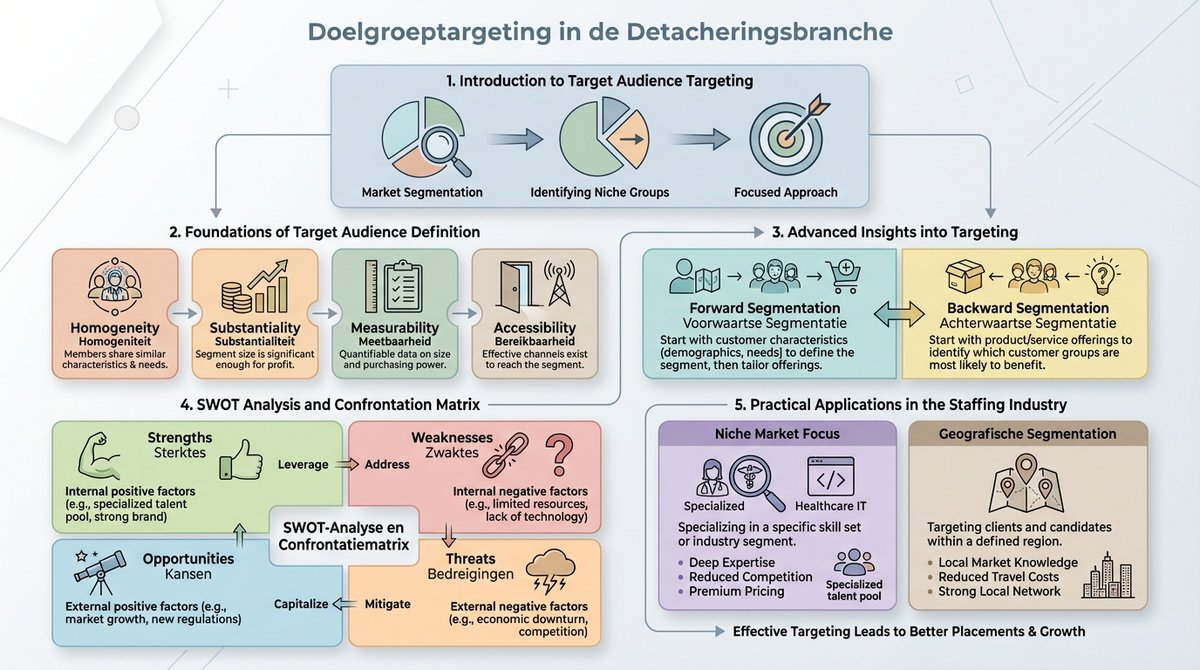
To move from a segmented market to a specific target group, businesses employ techniques such as forward segmentation and backward segmentation. In forward segmentation, businesses start by examining the market and discovering identifiable groups that exhibit distinct characteristics and needs that align with the company's capabilities and objectives. In contrast, backward segmentation involves starting with the needs and desires the business is equipped to meet and identifying segments within the market that share these traits.
Key criteria for segmenting and targeting include:
-
Homogeneity and Heterogeneity: Segments should be internally homogeneous, meaning members share similar characteristics or needs, while being distinct and heterogeneous from other segments.
-
Substantiality: The segment must be large and profitable enough to warrant a tailored marketing strategy.
-
Measurability: The ability to quantify the segment in terms of size, buying power, and other relevant factors.
-
Accessibility: The market segment must be reachable and effectively served through existing marketing efforts.
Understanding these criteria can help staffing businesses make informed decisions about which market segments to target and develop specific strategies to appeal to them effectively.
Deep-Dive into Market Segmentation Strategies
A well-structured segmentation strategy often involves detailed analyses and strategic planning. This planning includes the development of strategic and operational plans. A strategic marketing plan utilizes tools such as the SWOT analysis and confrontation matrix to set a solid foundation, while operational plans might employ the STP (Segmenting, Targeting, Positioning) framework for execution.
SWOT Analysis and Confrontation Matrix
-
SWOT Analysis assesses the internal and external factors affecting the business, identifying strengths, weaknesses, opportunities, and threats.
-
Confrontation Matrix helps link these internal and external factors to formulate strategies by identifying where the company's strengths can exploit opportunities and how it can mitigate threats or compensate for weaknesses.
These tools are indispensable for breaking down complex markets into understandable segments, allowing firms to align their strengths strategically with market opportunities.
Forward and Backward Segmentation
-
Forward Segmentation: Start with the current state of the market, then segment it based on existing needs and preferences. This approach helps identify recognizable and actionable segments within the broader market.
-
Backward Segmentation: Begin with the value propositions and competencies the company can offer, then identify which market segments most need these. It can often uncover new, untapped opportunities.
Both strategies, when applied effectively, lead to better positioning and more precise alignment with market demands.
Practical Applications in the Staffing Industry
Let's consider two scenarios in the staffing industry to illustrate the principles of target audience targeting.
Scenario 1: Niche Market Focus
A mid-sized staffing agency aims to concentrate its services on the IT sector, which demands highly specialized skills. By employing a backward segmentation approach, they identify segments within the IT sector (e.g., cybersecurity experts, data analysts) that align well with their recruitment expertise and existing client base. They tailor their marketing strategy to highlight their proficiency in fulfilling complex IT roles, thereby enhancing their brand's value proposition and attracting top-tier IT talent and companies needing such expertise.
Scenario 2: Geographic Segmentation
A staffing company identifies geographical trends that affect its operations, such as emerging tech hubs outside major cities. By focusing on these burgeoning areas, the company can leverage less saturated markets by offering exclusive training and hiring programs. They conduct thorough market analyses to understand the demographics, key businesses, and workforce trends in these areas, and align their recruiting strategies to meet the emerging demand, leading to a competitive edge in these developing markets.
Both examples illustrate the importance of understanding and defining the target audience accurately within the staffing industry. Such specific targeting ensures that marketing efforts are not only efficient but also crucial in building sustainable business growth.
Conclusion
In understanding the intricacies of target audience targeting, staffing firms can enhance their focus, streamline operations, and effectively position themselves as leaders in their chosen niche markets. Mastery of segmentation techniques, coupled with strategic and operational planning, paves the way for tailored marketing strategies that align closely with customer needs. This focus empowers staffing companies to better serve their markets, enhancing client satisfaction and driving lasting growth.
In the next lesson, we will explore how these targeting strategies integrate with broader product and pricing strategies, setting the stage for comprehensive market performance improvements. Up next: Product- en Prijsstrategieën voor Detacheringsbedrijven — where this becomes even more practical.